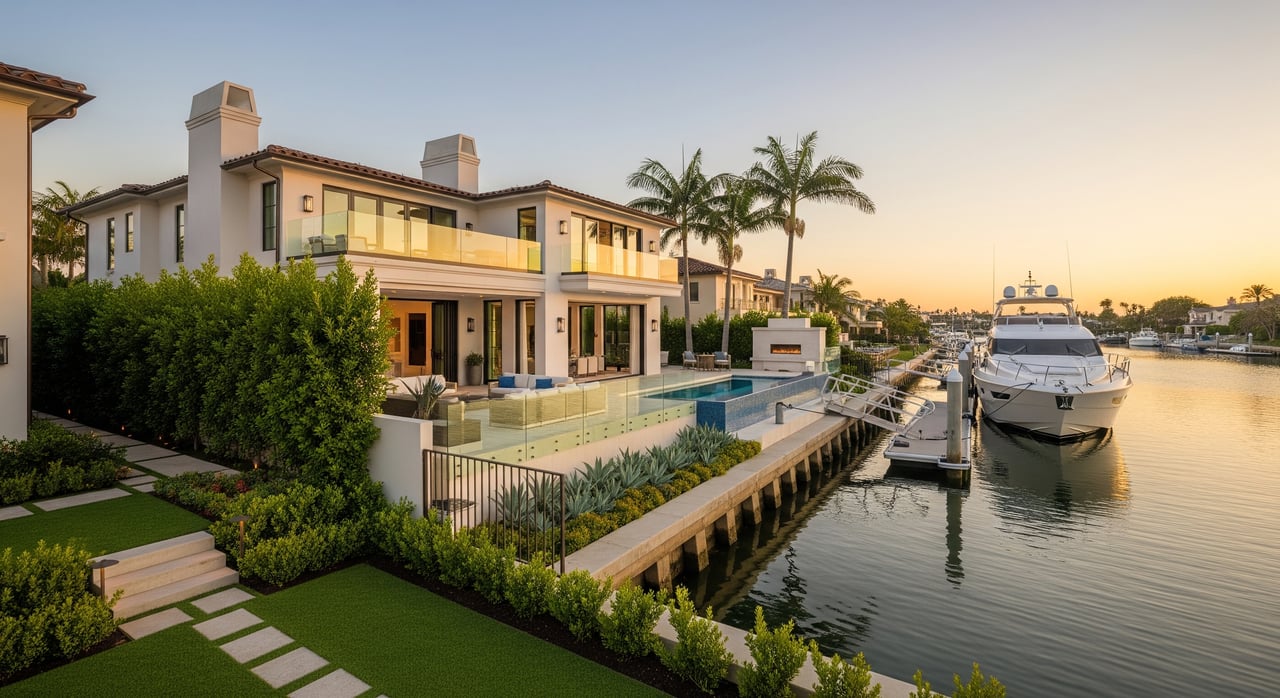
Ever pictured stepping from your back patio onto your boat? If Huntington Harbour is on your shortlist, you’re looking at one of Orange County’s most unique waterfront lifestyles. The tradeoff is added homework on docks, HOAs, inspections, and flood risk. This guide walks you through the key checks so you can buy confidently and enjoy the Harbour lifestyle. Let’s dive in.
Why Huntington Harbour stands out
Huntington Harbour is a planned network of man‑made canals and islands in northeast Huntington Beach with single‑family homes, condos, and private docks. The canals connect to Bolsa Chica channels and the ocean, but water depth, tides, and sandbars affect access and the type of boats you can use.
Compared with other OC coastal areas, here’s what sets the Harbour apart:
- Waterfront scarcity and premiums. True waterfront lots with private docks are limited and typically trade at a premium to non‑waterfront homes.
- Boat scale. The Harbour mainly supports smaller recreational boats and modest yachts. If you want very large yacht berths, you may compare options in places like Newport Beach or Marina del Rey.
- Residential feel. The vibe is more residential and boat‑centric than the tourist and retail hubs along central beachfront areas.
- HOAs are common. Many properties are in associations that set rules for docks, boat sizes, and maintenance.
- Flood exposure. As a low‑lying canal system, properties face distinct flood and long‑term sea‑level rise considerations.
Understand dock rights before you bid
Confirm what you own
Not all docks are the same. Before you write an offer, verify:
- Whether the dock is deeded to the property, assigned by the HOA’s CC&Rs, or governed by a separate lease or waitlist.
- Any recorded easements for dock access, seawall maintenance, or utilities.
- Title exceptions affecting dock use and access in the preliminary title report.
Ask the listing agent for proof of dock ownership early. Ordering a survey that shows the dock, bulkhead, and setbacks can help you avoid surprises.
Review HOAs and CC&Rs
Request and review the full HOA package. Focus on:
- Boat and dock rules. Size limits, moorage rules, guest slip policies, and any architectural or electrical standards at the dock.
- Financial health. Current budget, reserve study, insurance summary, and disclosures on special assessments or major upcoming work like dredging or seawall projects.
- Litigation and enforcement. Pending claims that could trigger future assessments or restrictions.
- Your disclosure rights. California’s Davis‑Stirling Act sets HOA disclosure requirements and buyer rights to review documents before you’re locked in.
Inspections tailored to waterfront homes
Go beyond the standard inspection
Waterfront ownership comes with extra systems to evaluate. In addition to a home inspection, consider:
- Dock and pier inspection. Check pilings, framing, decking, fasteners, mooring hardware, and any boat lift. Verify dock electrical safety, including GFCI protection.
- Seawall or bulkhead assessment. Look for cracking, settlement, scour, undermining, and concrete spalling. Ask for repair records and any engineer reports.
- Moisture and corrosion. Salt air can speed up wear on HVAC units, exterior metals, windows, and finishes.
- Termite and dry rot. Wood near water is more vulnerable to wood‑destroying organisms.
- Planned changes. If you want to enlarge or reconfigure a dock, get a structural opinion and confirm permits with the city.
For permits and local standards, review the City of Huntington Beach’s planning and permitting resources on the official city site.
Check environmental factors
Conditions on the water change. It helps to understand:
- Channel depth and sedimentation. Dredging history and schedules can affect usable depth and navigation.
- Water quality and odors. Proximity to the Bolsa Chica wetlands can influence seasonal conditions; learn more from the Bolsa Chica Conservancy.
- Protected habitat. Shoreline work may require special permits because of nearby ecological resources.
Hire a licensed home inspector with waterfront experience, a marine contractor for docks and seawalls, and engineers as needed.
Flood, insurance, and long‑term risk
Know your flood zone
Do not assume a canal‑front home is outside a flood area. Check the FEMA Flood Insurance Rate Map for your address. If the property is in a Special Flood Hazard Area, most lenders will require flood insurance. Start with the FEMA Flood Map Service Center.
Compare insurance coverage
Standard homeowners policies generally exclude flood. Plan to:
- Price flood insurance if required by your lender or desired for peace of mind. Private flood options may be available in addition to NFIP policies.
- Review coverage for docks, lifts, and boats. These often need endorsements or separate policies.
- Check wind and water damage sublimits and deductibles in coastal policies.
- Consider earthquake coverage separately, especially in soft soil or liquefaction areas.
Plan for sea‑level rise
Even if today’s flood risk is moderate, long‑term sea‑level rise can affect access, insurance costs, and resale. Explore scenarios using the NOAA Sea Level Rise Viewer and watch for local adaptation efforts or infrastructure projects published by the City of Huntington Beach.
Due diligence checklist for buyers
Use this list before or right after mutual acceptance:
- Preliminary title report, recorded plat, and legal description. Confirm dock deed status, easements, and liens.
- Survey showing boundaries, docks, and bulkheads; order an updated survey if needed.
- Full HOA package. CC&Rs, bylaws, meeting minutes, rules for docks and boats, financial statements, reserve study, insurance summary, and litigation disclosures.
- Seller records. Recent invoices for dock, seawall, dredging, or shoreline work.
- Inspections. Home, dock and pilings, seawall, termite, and lift/electrical where applicable.
- Flood determination. FEMA flood zone check and insurance quotes for flood and dock/boat coverage.
- Permit history. City and county permits for dock, seawall, and any remodels; verify finals and sign‑offs.
- Elevation certificate. Often required for flood insurance pricing if the home is in a mapped flood zone.
- Environmental context. Dredging schedules, wetlands proximity, and any restrictions that may affect work at the shoreline.
Who should consider the Harbour
Huntington Harbour can be a great fit if you:
- Want a private dock and backyard boating lifestyle.
- Are comfortable with HOA rules and periodic maintenance on docks and seawalls.
- Plan to use smaller recreational boats or modest yachts suited to local depths and tides.
- Value a residential, boat‑forward neighborhood over tourism‑heavy zones.
You might prefer another coastal market if you:
- Need slips for very large yachts and extensive marina infrastructure.
- Prefer bluff‑top or elevated homes to reduce canal‑front flood exposure.
- Want to be in the heart of major beachfront retail and nightlife hubs.
Your next steps
You can enjoy the Harbour lifestyle with fewer surprises when you confirm dock rights, study HOA rules, schedule waterfront‑specific inspections, and price insurance early. If you want hyperlocal guidance and strategic representation in Huntington Harbour, connect with Kevin Sullivan to walk through options, off‑market opportunities, and a tailored due diligence plan.
FAQs
What makes Huntington Harbour different from other OC coasts?
- It is a residential canal system with private docks, smaller‑scale boats, and more HOA governance than many single‑family neighborhoods, plus distinct flood and sea‑level considerations.
How do I confirm a dock is included with a home?
- Review the preliminary title report and legal description, request HOA documents and dock rules, and obtain proof of dock ownership or assignment from the seller before you offer.
Which inspections are essential for a Harbour property?
- In addition to a home inspection, schedule dock and piling, seawall, termite, and lift/electrical inspections. Consider an engineer if you plan dock changes.
Will my lender require flood insurance in the Harbour?
- If the home is in a Special Flood Hazard Area on FEMA maps, most lenders will require flood insurance. Verify using the FEMA Flood Map Service Center.
Can I keep a large yacht at a Harbour home?
- Boat size is limited by channel depth, tides, sandbars, and HOA rules. Many homes suit smaller recreational boats or modest yachts rather than very large vessels.